Lion’s Mane Mushroom: Benefits, Science, Safety & Supplements
Lion’s Mane Science: What Does the Research Say?
Lion’s Mane (Hericium erinaceus) is an edible mushroom that has attracted considerable scientific interest, particularly in relation to the brain, cognition and the nervous system.
It is also one of the most popular mushrooms used in supplements.
But what does the Lions Mane Science based evidence actually show?
Laboratory and animal research has identified potentially interesting biological effects, while a number of small human studies have investigated cognition, mood and other outcomes. However, the human evidence remains relatively limited and results are not consistently positive.
This page looks what is behind Lion’s Mane research and explains what we currently know — and what remains uncertain.
Important: Lion’s Mane is a food and dietary supplement ingredient, not a proven treatment for dementia, Alzheimer’s disease, depression, anxiety or other medical conditions. Anyone with a medical condition or taking medication should speak with an appropriately qualified healthcare professional before using supplements.
What Is Lion’s Mane?
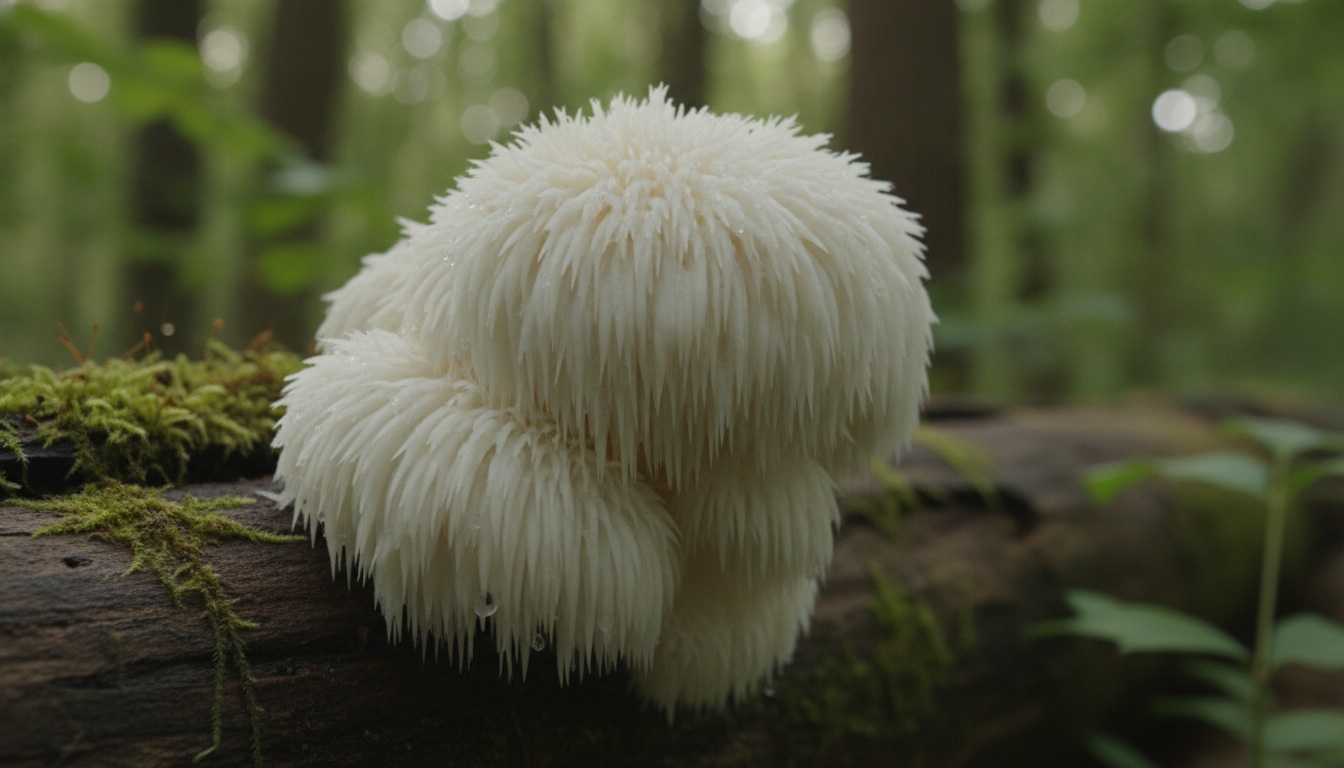
Lion’s Mane is the common name for Hericium erinaceus, an edible fungus recognised by its distinctive white, hanging spines.
It has a history of traditional use in parts of Asia and has become increasingly popular in Western food supplements.
Lion’s Mane supplements can contain:
- Whole mushroom powder
- Fruiting-body extracts
- Mycelium
- Extracts produced using different solvents or extraction methods
- Standardised preparations
- Combinations of mushroom ingredients
This distinction is important because research involving one preparation cannot automatically be assumed to apply to every Lion’s Mane supplement.
Why Are Scientists Interested in Lion’s Mane?
Lions Mane Science Based Researchers have identified a number of compounds in Lion’s Mane that have attracted scientific interest.
These include hericenones and erinacines, along with various polysaccharides and other compounds.
Laboratory Lions Mane research has investigated whether some of these compounds may influence biological processes associated with the nervous system, including pathways involving nerve growth factor (NGF).
For example, laboratory research has reported that hericenones and erinacines can stimulate NGF biosynthesis in experimental models.
However, demonstrating an effect in a laboratory is an early stage of research. It does not establish that eating Lion’s Mane or taking a Lion’s Mane supplement will produce the same effect in humans.
Lion’s Mane and Cognitive Function
Cognition is probably the area that has generated the greatest interest in Lion’s Mane research.
Researchers have investigated outcomes including:
- Memory
- Cognitive function
- Attention
- Executive function
- Information processing
- Mood
- Subjective stress
The human evidence is interesting, but still relatively small.
A 2009 Human Clinical Trial
One of the frequently cited human studies was a double-blind, placebo-controlled clinical trial involving 30 people aged between 50 and 80 who had been diagnosed with mild cognitive impairment.
Participants received either Lion’s Mane or placebo for 16 weeks.
The researchers reported significantly higher scores on their cognitive-function measure in the Lion’s Mane group at weeks 8, 12 and 16 compared with placebo.
However, the study was small, with only 15 participants in each group.
The researchers also followed participants for four weeks after supplementation stopped, and the cognitive scores declined after Lion’s Mane consumption ended.
This is therefore an interesting study, but it should not be interpreted as proof that Lion’s Mane prevents dementia or permanently improves memory.
Read the original study on PubMed → (PubMed)
What About Healthy Younger Adults?
A 2023 pilot study investigated both the short-term and 28-day effects of Lion’s Mane in 41 healthy adults aged 18–45.
Participants received 1.8 g of Lion’s Mane.
After a single dose, researchers found faster performance on one Stroop-task measure. After 28 days, there was a trend towards reduced subjective stress, but this did not reach conventional statistical significance.
The researchers described the results as tentative and emphasised the need for larger studies.
Read the 2023 study on PubMed → (PubMed)
A More Recent 2025 Study
A 2025 randomised, double-blind, placebo-controlled crossover study investigated the acute effects of a standardised Lion’s Mane fruiting-body extract in 18 healthy adults aged 18–35.
Participants consumed a single 3 g dose of a 10:1 extract.
The researchers found no significant overall improvement in global cognitive function or mood compared with placebo.
One individual test — a pegboard test measuring psychomotor performance — did show improved performance after Lion’s Mane.
The Lions Mane science researchers concluded that any effects may be specific to particular cognitive domains and that further research is required, particularly longer-term studies.
Read the 2025 study on PubMed → (PubMed)
This study is particularly useful because it demonstrates why claims such as “Lion’s Mane boosts your brain” are too simplistic.
The overall cognitive results were not significantly different from placebo.
What Does the Overall Human Evidence Show?
A Lions Mane science based 2024 review examined human research into mushrooms and mood and neuro-cognitive health.
The review identified 34 human studies involving different mushrooms.
The authors reported that epidemiological studies generally found associations between mushroom-containing dietary patterns and cognition or mood. However, the results from intervention studies were mixed.
Lion’s Mane was the mushroom most commonly investigated in the intervention studies.
The authors concluded that additional human studies with larger sample sizes and appropriately sensitive cognitive tests are needed.
Read the review on PubMed → (PubMed)
What Does a 2025 Systematic Review Say?
A 2025 systematic review examined the available literature on Hericium erinaceus.
The researchers included:
- 5 randomised controlled trials
- 15 laboratory studies
- 3 pilot clinical trials
- 1 cohort study
- 1 case report
- 1 computer-based analysis
The review found potentially interesting findings relating to cognition and several other biological processes.
However, the evidence base contains a mixture of laboratory, preclinical and relatively small clinical studies.
This is important because a large body of laboratory research does not necessarily mean there is strong clinical evidence in humans.
Read the systematic review on PubMed → (PubMed)
Lion’s Mane and Nerve Growth Factor
One of the most interesting areas of Lion’s Mane science research concerns nerve growth factor (NGF).
NGF is a protein involved in the growth, maintenance and survival of certain nerve cells.
Laboratory research has identified compounds from Lion’s Mane — particularly hericenones and erinacines — that can stimulate NGF-related activity in experimental models.
This has led to considerable interest in whether Lion’s Mane could eventually have applications in neurological health.
However, this is an important distinction:
Evidence that a compound influences NGF-related pathways in laboratory or animal models does not prove that consuming a Lion’s Mane supplement produces a clinically meaningful neurological effect in humans.
Further human research is required.
Lion’s Mane and the Brain: What Can We Say?
Based on the current evidence, it is reasonable to say that Lion’s Mane is a promising area of scientific research.
It is not reasonable to say that research has established that Lion’s Mane:
- Prevents dementia
- Treats Alzheimer’s disease
- Reverses cognitive decline
- Repairs damaged nerves
- Prevents Parkinson’s disease
- Treats depression
- Treats anxiety
These are much stronger claims than the existing evidence supports.
Lion’s Mane and Mood
Some Lions Mane research has investigated possible effects on mood and subjective stress.
The 2023 pilot study in healthy adults reported a trend towards reduced subjective stress after 28 days, but the result did not reach conventional statistical significance.
The 2025 acute study in healthy younger adults did not find a significant overall effect on mood.
Consequently, the evidence for Lion’s Mane and mood remains preliminary.
Read the 2023 human study → (PubMed)
What About Alzheimer’s Disease and Dementia?
This is an area where online marketing can go well beyond the evidence.
Laboratory and animal research has generated interest in Lion’s Mane and neurological processes relevant to neurodegeneration.
However, the human clinical evidence is currently insufficient to conclude that Lion’s Mane prevents, treats or reverses Alzheimer’s disease or dementia.
The small 2009 clinical trial involved people with mild cognitive impairment, not established Alzheimer’s disease.
The distinction is important.
Mild cognitive impairment is not the same thing as Alzheimer’s disease or dementia.
Therefore, statements such as “Lion’s Mane prevents Alzheimer’s” should not be presented as established scientific facts.
What About Nerve Regeneration?
The idea that Lion’s Mane “regenerates nerves” is often used in supplement marketing.
There is a scientific basis for researchers being interested in this possibility because of laboratory findings involving NGF and neuronal processes.
But there is a considerable gap between laboratory findings and demonstrating meaningful nerve regeneration in humans taking a commercially available supplement.
At present, human evidence is not sufficient to claim that Lion’s Mane repairs damaged nerves.
Lion’s Mane and Cancer Research
Lion’s Mane has also been investigated in laboratory research relating to cancer cells.
Some extracts and isolated compounds have demonstrated interesting effects in laboratory experiments.
However, laboratory anti-cancer activity is not evidence that Lion’s Mane treats cancer in humans.
People receiving cancer treatment should not replace conventional treatment with Lion’s Mane or any other supplement.
If considering a supplement during cancer treatment, discuss it with your oncologist or another appropriately qualified healthcare professional.
Is Lion’s Mane Safe?
Lion’s Mane has a history of use as an edible mushroom, and clinical research has generally reported relatively few adverse effects.
However, relatively limited human research means that safety data are not as extensive as they are for many established medicines.
Possible adverse effects may include:
- Digestive discomfort
- Headache
- Allergic reactions
The 2025 systematic review specifically identified stomach discomfort, headache and allergic reactions as potential adverse effects reported in the literature.
Read the systematic review → (PubMed)
There has also been a published case report of anaphylaxis following consumption of fresh Lion’s Mane, demonstrating that serious allergic reactions are possible even though they appear uncommon.
People with mushroom allergies should exercise particular caution.
Why the Type of Lion’s Mane Supplement Matters
When reading Lion’s Mane research, one of the most important questions is:
What preparation did the researchers actually use?
A study might use:
- Dried fruiting-body powder
- Mycelium
- A hot-water extract
- An alcohol extract
- A dual extract
- A concentrated extract
These are not necessarily interchangeable.
For example, a study using a particular concentrated extract does not automatically demonstrate that an ordinary Lion’s Mane powder containing a much smaller amount of mushroom will produce the same result.
This is one of the most overlooked issues when interpreting mushroom supplement research.
What Does “10:1 Extract” Mean?
You may see Lion’s Mane supplements described as 10:1 extracts.
This generally means that a quantity of raw material has been used to produce a smaller quantity of extract.
However, an extract ratio alone does not tell you the complete chemical composition or necessarily how much of a particular compound is present.
For that reason, consumers should look beyond an extract ratio and consider the manufacturer’s information about the actual product.
What Are Hericenones and Erinacines?
Hericenones and erinacines are groups of compounds associated with Lion’s Mane research.
Hericenones have been identified primarily in fruiting bodies, while erinacines are associated particularly with the mycelium.
Researchers have investigated these compounds because of their potential effects on NGF-related processes and other biological pathways.
However, identifying an interesting compound is only the beginning of the research process.
The key question is whether an amount that can realistically be obtained through supplementation produces a meaningful effect in humans.
That question remains incompletely answered.
What Does the Science Actually Tell Us?
The most balanced interpretation of the evidence is:
What looks interesting
- Lion’s Mane contains biologically active compounds.
- Laboratory studies have identified effects involving neurological pathways.
- Animal research has produced interesting findings.
- Several small human studies have investigated cognition and mood.
- Some human studies have reported potentially beneficial findings.
What remains uncertain
- Whether Lion’s Mane meaningfully improves cognition in healthy people over the long term.
- Whether it can slow cognitive decline.
- Whether it has clinically meaningful effects in neurodegenerative disease.
- Which compounds are responsible for particular effects.
- Which supplement preparations are most effective.
- The optimum dose and duration of supplementation.
What has not been established
Current evidence does not establish Lion’s Mane as a proven treatment for dementia, Alzheimer’s disease, depression, anxiety, cancer or nerve damage.
Our Assessment of the Evidence
Overall scientific interest: High
Human evidence: Limited but growing
Evidence for cognitive benefits: Promising but inconclusive
Evidence for neurological disease treatment: Insufficient
Laboratory evidence: Substantial and interesting
Need for further research: High
The most scientifically responsible conclusion is that Lion’s Mane is an interesting research subject, particularly in relation to cognition and neurological processes, but considerably more high-quality human research is required before strong health claims can be made.
Frequently Asked Questions
Does Lion’s Mane improve memory?
Some small human studies have reported improvements in measures of cognitive function, particularly in people with mild cognitive impairment. Other studies have produced less convincing results. Current evidence is insufficient to say that Lion’s Mane reliably improves memory.
Does Lion’s Mane prevent dementia?
There is currently insufficient human evidence to conclude that Lion’s Mane prevents dementia.
Does Lion’s Mane increase NGF?
Laboratory research has identified Lion’s Mane compounds that can stimulate NGF-related activity in experimental models. Whether taking a Lion’s Mane supplement produces a clinically meaningful increase in NGF in humans is not established.
Is Lion’s Mane scientifically proven?
No single health benefit can currently be described as conclusively proven by the available human evidence. Research is ongoing and some findings are promising, but larger and better-designed clinical trials are needed.
Is Lion’s Mane safe?
Available human research suggests it is generally well tolerated, but adverse effects and allergic reactions are possible. Safety information is still less extensive than for many established medicines.
Is Lion’s Mane better as an extract or powder?
There is no simple answer. Different preparations can contain different compounds and concentrations. When comparing products, consider the species, part of the mushroom used, extraction method, dose and information about the product’s composition.
Conclusion
Lion’s Mane is one of the more interesting medicinal mushrooms from a scientific research perspective.
There is a plausible biological basis for studying it, laboratory research has identified potentially important compounds and several human studies have produced interesting findings.
But the science needs to be interpreted carefully.
The current evidence does not justify presenting Lion’s Mane as a proven brain supplement or treatment for neurological disease.
Instead, the most accurate description is that Lion’s Mane is a promising area of research with encouraging but still limited human evidence.
As further clinical trials are published, our understanding of Lion’s Mane and its potential effects should become clearer.
Key Scientific Sources
Mori et al. (2009) — Lion’s Mane and mild cognitive impairment
Read on PubMed →
Docherty et al. (2023) — Lion’s Mane, cognition, stress and mood in young adults
Read on PubMed →
Surendran et al. (2025) — Acute Lion’s Mane effects on cognition and mood
Read on PubMed →
Menon et al. (2025) — Systematic review of Lion’s Mane supplementation
Read on PubMed →
Review of mushrooms, mood and neurocognitive health (2024)
Read on PubMed →
ALSUntangled review of Lion’s Mane
Read on PubMed →